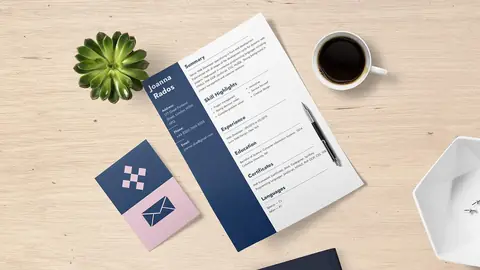
10 Best Free CV Resume Templates for InDesign
By Sofia Ramirez · Published · 5 min read
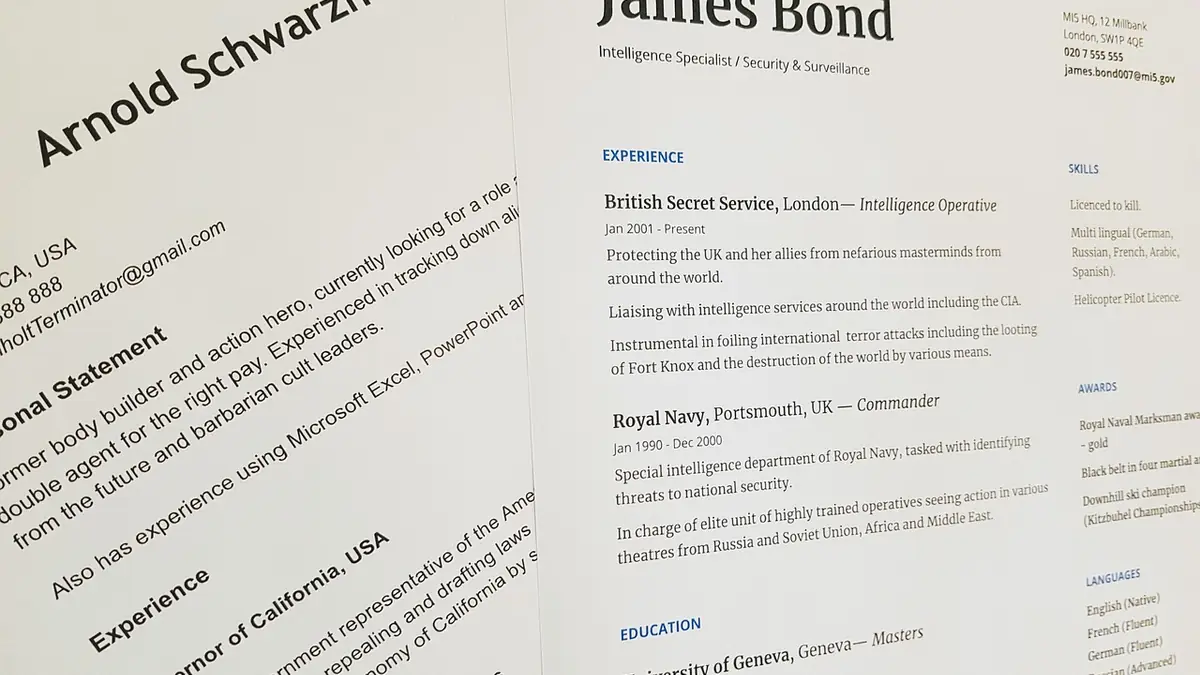
InDesign remains the most precise tool for laying out a CV that has to look typeset rather than typed. The catch: most free templates are Illustrator or Word files in disguise, with broken paragraph styles, missing fonts, and layers that fight you. We tested dozens and kept ten that actually open, reflow, and export cleanly.
Each entry below lists what the template does well, where it falls short, and who it suits — from a two-page academic CV to a one-page creative resume. Download links are on each designer's page; always check the licence before you send a file to a recruiter.
How we judged these InDesign CV templates
Every template had to meet four tests. First, it opens in InDesign CS6 or later without missing-link dialogs. Second, it uses real paragraph and character styles rather than local overrides, so you can change fonts globally in minutes. Third, text frames are threaded and the document is sized for A4 or US Letter — not an arbitrary canvas. Fourth, the licence permits commercial and personal use at no cost.
We also weighed practicalities that only show up under deadline pressure: how many pages the template assumes, whether it ships with an editable cover letter, and whether the colour palette survives a greyscale print. Templates that needed more than about 20 minutes of cleanup before typing were cut, however attractive they looked in the preview.
One deliberate exclusion: no template that relies on a single foundry font you cannot legally install. Free templates often pair a display face with body text; if the body face is not free, the template is a trap. All ten below use either system fonts or fonts with free licences, so you can hand the file to a colleague without a font panic.
The 10 best free InDesign CV templates
1. Minimal Two-Column Resume (A4 + Letter). A workhorse layout with a narrow skills column and a wide experience column. Ships with 12 paragraph styles, a matching cover letter, and a print-ready CMYK swatch set. Best for mid-level roles where you need to fit a lot on one page. Weakness: the two-column structure can confuse older applicant tracking systems, so keep a single-column export as backup.
2. Editorial Serif CV. A single-column, type-led template using a free serif for headings and a neutral sans for body. It handles long job descriptions gracefully and looks at home in publishing, academia, and communications. The trade-off is density: you will fit roughly 10–15% less text per page than a compact sans layout, so it suits candidates with two pages to spare.
3. Creative Portfolio Resume. A grid-based one-pager with a project strip and a short profile. It is the most visually distinctive on this list, and the fastest to break if you paste in unformatted text. Use it for design, advertising, and marketing applications where a portfolio link does the heavy lifting. Keep the project strip to three items or it starts to look like a flyer.
4. Academic CV (Multi-Page). Built for 4–8 pages with hanging-indent publication lists, grant sections, and teaching experience. Styles are consistent across the whole document, which matters when you add entries over several years. It is not a one-page job template and should not be forced into one. The heading hierarchy is deliberately quiet — appropriate for review panels that read for content, not decoration.
5. Swiss Grid Resume. Strict baseline grid, generous margins, and a restrained palette. This is the cleanest template here for technical and finance roles, and it exports predictably to PDF. The strictness is the point, but it also means long unbroken job titles will need manual kerning. Allow 15 minutes to adjust the grid if you switch from A4 to Letter.
6. Timeline Resume. A horizontal or vertical timeline anchors dates so recruiters can scan a career path quickly. It works best for steady progressions and less well for career changes or freelance clusters, where the timeline implies a linearity that is not there. The template includes both orientations; the vertical version is more forgiving for print.
7. Compact One-Page Resume. Tight leading, small caps section heads, and a 9.5/12 body setting that fits a full career on a single page without feeling cramped. Ideal for early-career applicants and anyone told to keep it to one page. Readability drops below 9pt, so resist the urge to shrink further just to squeeze in one more bullet.
8. Infographic Skills Resume. A modest use of bars and dots to show tool proficiency, paired with a conventional experience section. Treat the graphics as optional: many recruiters ignore them, and some parsing tools choke on them. The template's real strength is its tidy contact block and a clear, editable skills matrix.
9. Bilingual CV Template. Two parallel master pages, one per language, with shared styles so you can keep formatting identical across versions. Useful for applicants in multilingual markets. The setup assumes you can edit both languages; if you only need one, delete the second master page before you start.
10. Cover Letter + CV Set. A restrained pair designed to be read together, with matching margins and type sizes. The cover letter is not an afterthought — it has its own styles and a sensible 250–300 word structure. Best value if you apply to a small number of roles and want a coherent application package.
- Check the page size before typing: A4 and US Letter differ by about 6mm in width.
- Open the Paragraph Styles panel first; if it is empty, the template is not worth your time.
- Keep a single-column copy of any two-column layout for online application forms.
- Confirm the licence allows commercial use before sending the PDF to a recruiter.
- Limit yourself to two typefaces; more is a common portfolio mistake.
Setting up an InDesign CV without breaking it
Start by replacing fonts through the Paragraph Styles panel, not by selecting text. A well-built template lets you swap the body face in one place and watch the document reflow. If headings jump or text overflows unpredictably, the template used local overrides — fix those before you type a word, or you will fight them for the rest of the afternoon.
Set your margins and columns before adding content. A typical CV uses 15–20mm margins on A4, with a body text size between 9.5 and 11pt and leading at roughly 1.2–1.4 times the size. Those ranges keep a page readable in print and on screen without cramming. If you need to fit more, tighten leading slightly before reducing type size.
Export to PDF with the preset that embeds fonts and preserves hyperlinks. For application portals, test the PDF in a plain viewer and check that text is selectable — if it is not, the file may be an image and will fail automated parsing. Keep an editable INDD and a clean PDF in the same folder so you are never rebuilding from scratch under deadline.
| Template | Pages | Layout | Paragraph styles | Best for |
|---|---|---|---|---|
| Minimal Two-Column | 1–2 | Two-column | 12 | Mid-level general roles |
| Editorial Serif | 1–2 | Single column | 10 | Publishing, communications |
| Creative Portfolio | 1 | Grid | 8 | Design and marketing |
| Academic CV | 4–8 | Single column | 14 | Research and academia |
| Swiss Grid | 1–2 | Single column | 9 | Finance, engineering |
| Timeline | 1–2 | Timeline | 11 | Steady career progression |
| Compact One-Page | 1 | Single column | 7 | Early career, one-page rule |
Which template suits which application
For corporate, finance, and engineering roles, choose the Swiss Grid or Compact One-Page template. These read as conventional and parse well. Avoid the infographic template here; graphics add visual noise without adding evidence. If the employer uses an online form, paste your content into a single-column version and keep the designed PDF for email or interview copies.
For creative roles, the Creative Portfolio and Editorial Serif templates earn their space, but only if the work behind them is strong. A distinctive layout cannot rescue a thin CV, and a conservative one will not sink a strong portfolio. Match the tone of the template to the tone of the studio: a Swiss grid says one thing, a serif editorial layout says another.
For academic and research applications, use the multi-page Academic CV and expect to maintain it over years. Consistency matters more than novelty. For career changers, the Timeline template is usually the wrong choice; the Compact One-Page or Minimal Two-Column layout lets you group transferable skills without implying a straight line that is not there.
- A good InDesign CV template is judged by its paragraph styles, not its preview image.
- Match the layout to the sector: conventional for corporate, distinctive for creative, consistent for academic.
- Keep a single-column PDF copy for online portals, even if you designed a two-column CV.
- Budget 10–40 minutes of setup depending on template complexity; the Academic CV takes longest.
Sofia curates and tests free design assets, from CV templates to icon sets, ensuring they meet quality and usability standards. With a background in visual communication, she provides honest assessments and time-saving tips. She believes the best resources are those that empower designers to work smarter.